
Which La Quinta Records Stay Open
La Quinta public records do not sit in one office. The city keeps records of its own work, Riverside County holds the largest local indexes, courts control case files, and state agencies publish specialized systems. An online index may be open even when the image, certified copy, or underlying file requires a fee, proof of eligibility, or a counter request.
| La Quinta record group | Official keeper | Web route and coverage | Access channel |
|---|---|---|---|
| Recorded deeds, liens, and instruments | Riverside ACR Recorder | ACR Document Search, recorder index from Jan. 1, 1974 | Public index; cart, office, mail, and copy rules for images |
| Clerk documents | Riverside ACR County Clerk | ACR clerk index from Jan. 1, 1893 | Public or restricted by record type |
| Property and assessment data | Riverside ACR Assessor | RivCoView current property portal | Free web portal; copies may cost |
| Court cases | Riverside Superior Court | Online coverage varies by division | Online product, terminal, counter, or copy request |
| Birth, death, and marriage copies | Riverside ACR and CDPH | Application pages, not a broad current-record index | Authorized or informational copy rules |
| City-created files | La Quinta City Clerk | Posted records, HUB, or city request page | Online, CPRA request, or department response |
| Custody and registry records | Riverside Sheriff, CDCR, DOJ | Separate county, state, and registry tools | Public fields with statutory limits |
California restricts sealed cases, juvenile and adoption files, confidential marriage records, signatures, Social Security and driver-license identifiers, protected addresses, and some law-enforcement material. Vital records follow their own copy statutes. A public index is therefore a finding aid, not a promise that every page behind it is open.
Search La Quinta Recorder Indexes
The Riverside ACR Document Search covers two county record streams with different depths. Recorder documents were indexed from January 1, 1974 through July 8, 2026 when inspected. Clerk documents ran from January 1, 1893 through May 29, 2026. That split explains why the same portal can expose an older clerk trail but still require offline research for a deed recorded before 1974.
Use a document number for a known filing, or combine name and dates to reduce a common-name result. People are entered as last name, first name, and middle initial. Advanced name searching supports exact terms, required and excluded words, sounds-like syntax, possible-letter marks, starts-with wildcards, grouped terms, phrases, and fuzzy or proximity searching. Those operators can resolve an index spelling problem before a counter request becomes necessary.
| Recorder search control | Required | How to enter it |
|---|---|---|
| Document number | No | Exact number when known |
| Recording date start | No | Month/day/year, paired with an end date as needed |
| Recording date end | No | Closes the requested date window |
| Name | No | Last First MI for a person; entity name as spelled |
| Document types | No | Autocomplete field; full option list was not captured |
| Advanced name searching | No | Checkbox opens added name-search controls |
Search results can route images or copy selections through a cart. Current line-item prices were not verified, so consult the ACR fee schedule rather than relying on a quoted amount.
Recover Older La Quinta Records
When an ACR name query returns nothing, the date may explain the gap. The recorder web index starts in 1974. Older deeds and instruments can require an office counter, a mail or copy form, microfilm, an older grantor-grantee index, archive help, or a verified historical collection. Clerk indexing starts at the 1893 creation of Riverside County, but each clerk record type still keeps its own public or confidential rules.
The same fallback principle applies elsewhere. Older court cases may need the correct courthouse terminal or clerk file request. Historical vital evidence may survive through library newspapers, obituaries, cemetery records, or archival indexes, while an official certificate still comes through Riverside ACR or CDPH. Give the custodian a name, date span, document or case number, address, and record type whenever possible.
- Index
- A list of record facts used to locate the underlying document.
- Image
- A digital view of the recorded page, which may have separate access or cost.
- Certified copy
- A custodian-attested copy accepted as official for its intended use.
- Custodian
- The agency or office responsible for keeping and producing a record.
- Exemption
- A legal basis allowing or requiring an agency to withhold information.
Read La Quinta Property Records
RivCoView is Riverside ACR's public property and map portal. Its search accepts an address, Property ID Number, or PIN. Visible tabs cover property search, assessment, sales, permits, area overview, census, education, and map layers. The research did not confirm owner-name searching or every parcel-card field, so treat the verified address and parcel routes as the public entry points.
A situs address is the parcel's physical location. The owner mailing address, when displayed in official assessment material, is where the office sends correspondence. The two can differ in a resort and seasonal-ownership market such as La Quinta. That difference is useful record context but does not prove residence. Carry the parcel number, legal description, sales date, or document number into the ACR recorder index.
Note: City permits also route through La Quinta's HUB, while RivCoView's Permits tab supplies a county property view.
Access La Quinta Court Records
The Riverside Superior Court online-services gateway serves La Quinta-area state cases. It divides civil, criminal and traffic, probate, family, small claims, payments, copies, and other services. Some civil party-name access is paid or registration based. Criminal and traffic access may depend on a case or citation number. The Indio Larson Justice Center is a major eastern-county location, but division and case assignment determine the correct counter.
Use a courthouse public terminal when an eligible record is not exposed on the web, and submit a clerk copy request when a plain or certified file document is needed. Sealed matters, juvenile cases, adoption files, and protected family information are not opened by a general request. Court case records also differ from court administrative records, so a CPRA-style request is not a substitute for the court's case-file procedure.
Order La Quinta Vital Records
Riverside ACR issues certified birth, death, and marriage copies for Riverside County events. CDPH Vital Records supplies the statewide path. California law distinguishes an authorized certified copy from an informational certified copy. The authorized form requires a qualifying relationship or role under Health and Safety Code provisions such as section 103526. An informational copy is marked as unable to establish identity.
Forms ask for the name on the record, event date and place, parent or spouse details as applicable, requester identity, mailing information, copy type, and payment. A mailed authorized request requires the sworn-statement and notary process. Confidential marriage records have narrower access. Divorce decrees and full dissolution files come from Riverside Superior Court, not from the county marriage desk.
Check eligibility first. A public-facing vital-record application does not make every certificate open to every requester, and fees may apply even when no record is found.
Find La Quinta Custody Records
The Riverside County Inmate Information System is the official county jail route. Public custody fields may include booking, charges, facility, and release or bail details when shown. State prison custody belongs in the CDCR Inmate Locator, while federal custody belongs in the Bureau of Prisons locator. Police reports and other sheriff material route through the Riverside Sheriff Records Bureau and remain subject to investigatory and privacy exemptions.
The county inmate system shown below is assigned to the La Quinta public-records page.
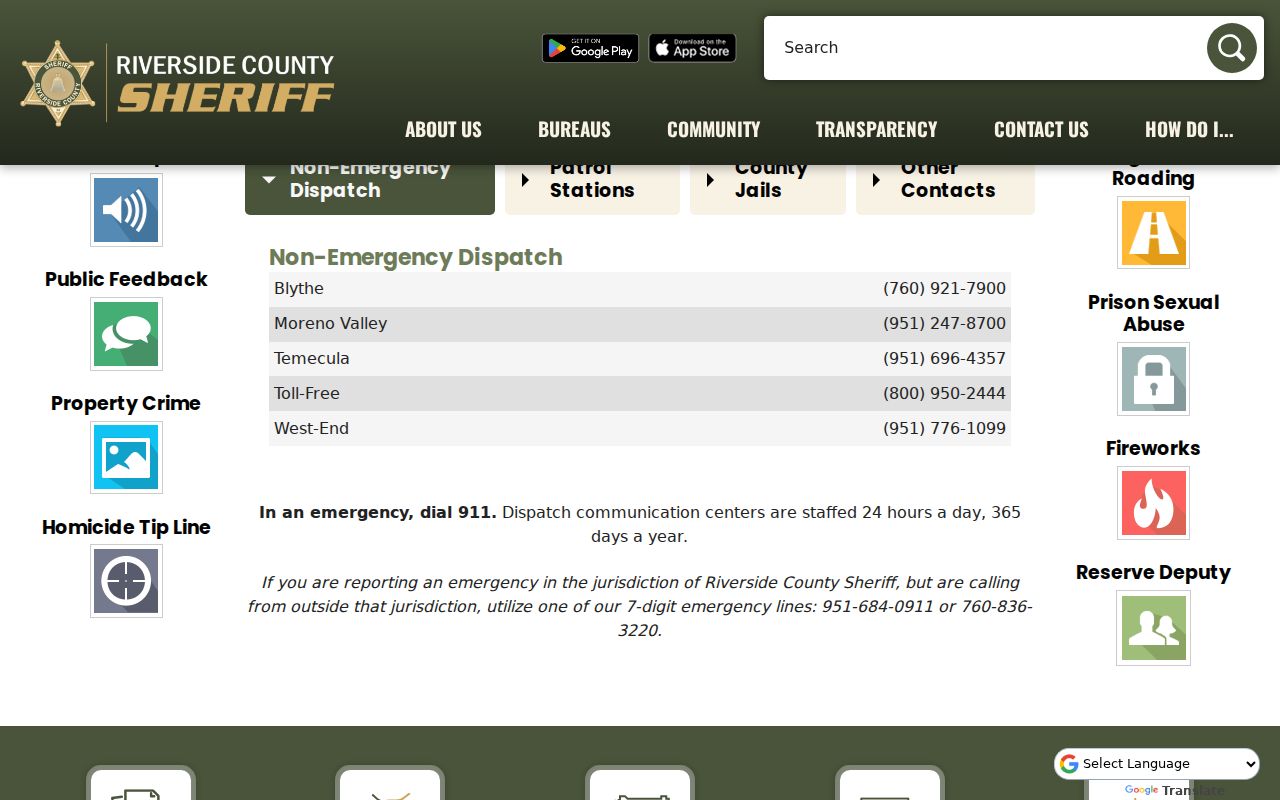
Use the county portal for current local custody, then switch systems only when the official record indicates state or federal jurisdiction.
California Megan's Law is a separate DOJ registry with name and geographic search paths. The official registry screenshot below shows that distinct public-record channel.
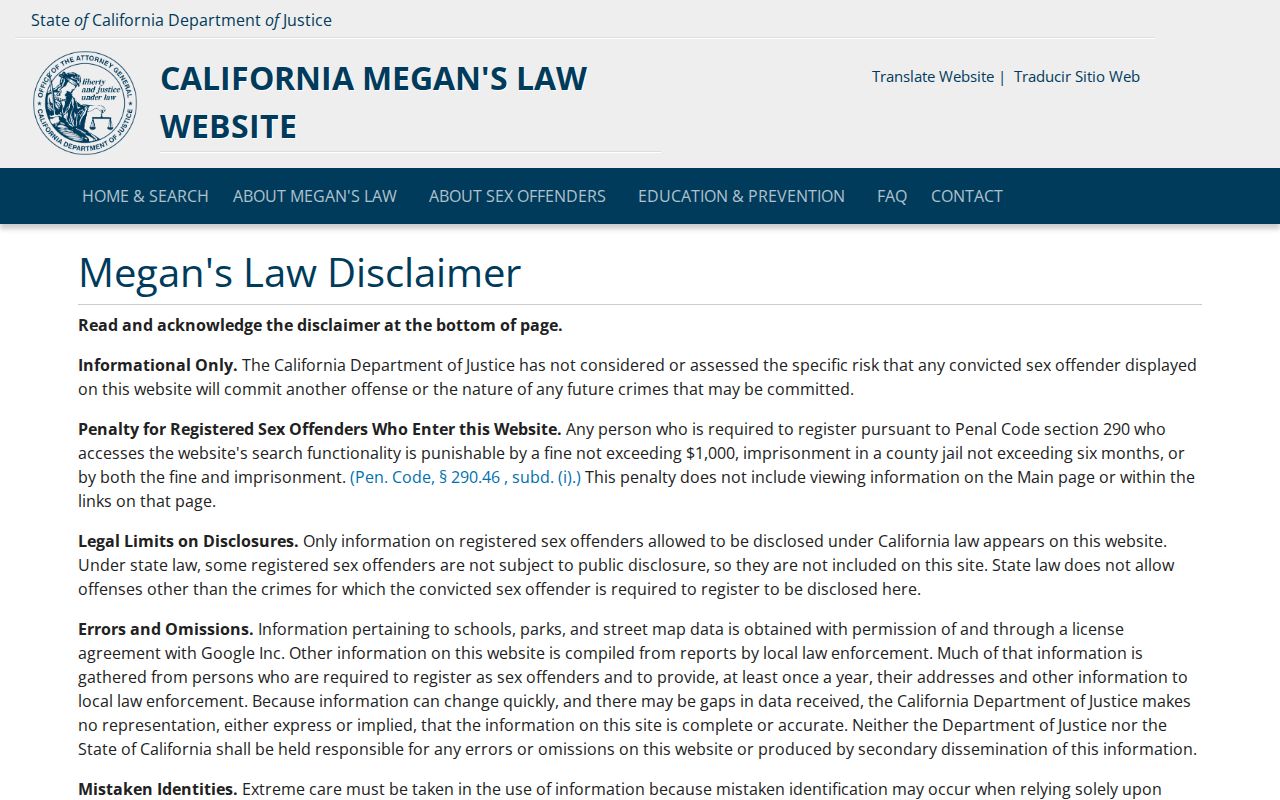
Registry use notices must be followed, and no public record may be used to threaten, stalk, or harass a person.
La Quinta Public Records Custodians
The correct custodian depends on who created the record. City minutes do not belong to the county recorder, and deeds do not belong to City Hall. Use the office's official page for current addresses, counter locations, hours, phone numbers, and fees, since those operational details can change.
Riverside County ACR
Recorded instruments, clerk records, property data, vital-copy services, marriage, and fictitious business names
La Quinta City Clerk
Council records, ordinances, resolutions, campaigns, city elections, and city records requests
Riverside Superior Court
Case dockets, filed documents, minutes, plain copies, and certified court copies subject to court rules
The Riverside ACR main site is the county hub captured for this page.
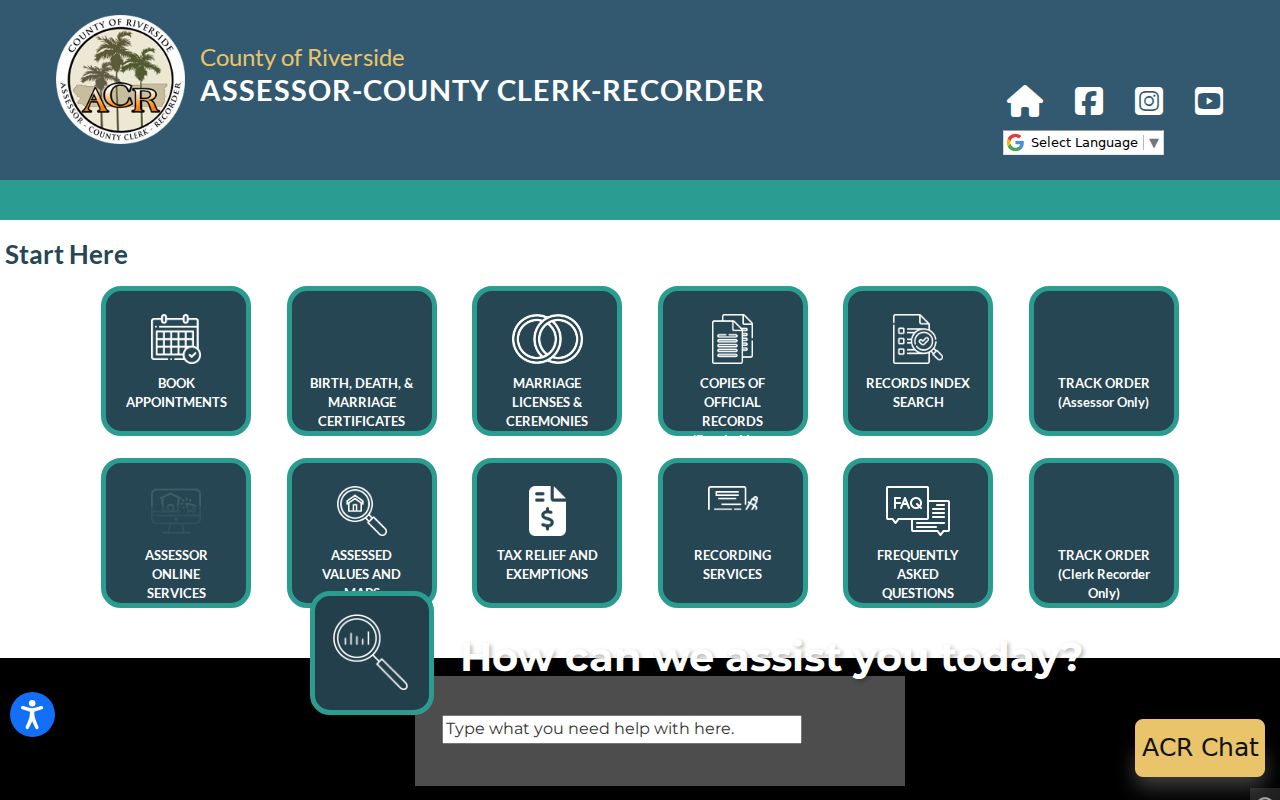
Its recorder, clerk, assessor, vital, and fee pages lead to the correct service without treating the combined office as one undifferentiated database.
Know La Quinta Records Request Rights
The California Public Records Act, Government Code section 7920.000 et seq., governs state and local agency records unless another law makes the material confidential. Any person may request an identifiable public record. Agencies must help a requester make an effective request, including help identifying records and describing where they are kept when needed under section 7922.600.
Government Code section 7922.535 generally gives an agency 10 days to determine whether it has disclosable records. Written notice may extend that determination by 14 days in unusual circumstances. This is a decision deadline, not a promise that a large production will be complete in 10 days. Section 7922.530 requires prompt availability after applicable direct duplication or statutory fees are paid. A withholding should cite its legal basis.
Privacy, investigatory material, pending litigation, confidential personnel or medical material, trade secrets, security concerns, and records made confidential by another statute may limit production. The agency should still segregate and release nonexempt portions when the law permits.
Fees depend on the access channel. A CPRA production generally uses direct duplication costs unless another statute authorizes more. Recorder and clerk services may separate an index search, plain image, certified copy, and cart purchase. Courts can distinguish name-search access, page copies, certifications, and other official services. Vital-record agencies charge certificate application fees under their own schedules. Check the keeper's current fee page before ordering, since the research deliberately avoids stale dollar amounts.
Submit a La Quinta Records Request
Use a public-records request for an identifiable city or agency record that is not already posted. Do not use it to bypass a court case-file process, voter-file restriction, or vital-record eligibility rule. A precise request is easier to search and less likely to produce delay or needless cost.
- Identify the office that created or received the record, such as the La Quinta City Clerk, Riverside ACR, or Sheriff's Records Bureau.
- Check the official index or posted-record page and save any document, parcel, permit, booking, or case number.
- Describe the record by title, subject, name, address, department, and a realistic date span. Ask for electronic copies when suitable.
- Review the determination, cited exemptions, estimated duplication cost, and proposed production schedule. Narrow the scope if that solves a real search problem.
- If access is denied, request the legal basis and use the agency review process or court remedy available under California law.
For recorder and clerk copies, the portal cart, office counter, and mail path may be faster than a general request. For court records, use the clerk's case-copy channel. For vital certificates, use the county or CDPH application with the required identity and eligibility material.
Keep the request and the agency's response. If a record is withheld in part, note the cited exemption and whether the office released a redacted version. If the description was too broad, revise it around a department, record title, or date range instead of asking staff to answer a question. CPRA covers existing records; it does not require an agency to create a new report just for the requester.
Lawful personal use. La Quinta public records may support family, estate, safety, property, scam-prevention, and civic research. Never use access to stalk, harass, intimidate, or harm anyone.